The Beach at Cayo Icacos
An honest inventory of the cay: the west-shore beach, the reef and its urchins, the quarry railway, and the nothing else. Then the packing list.
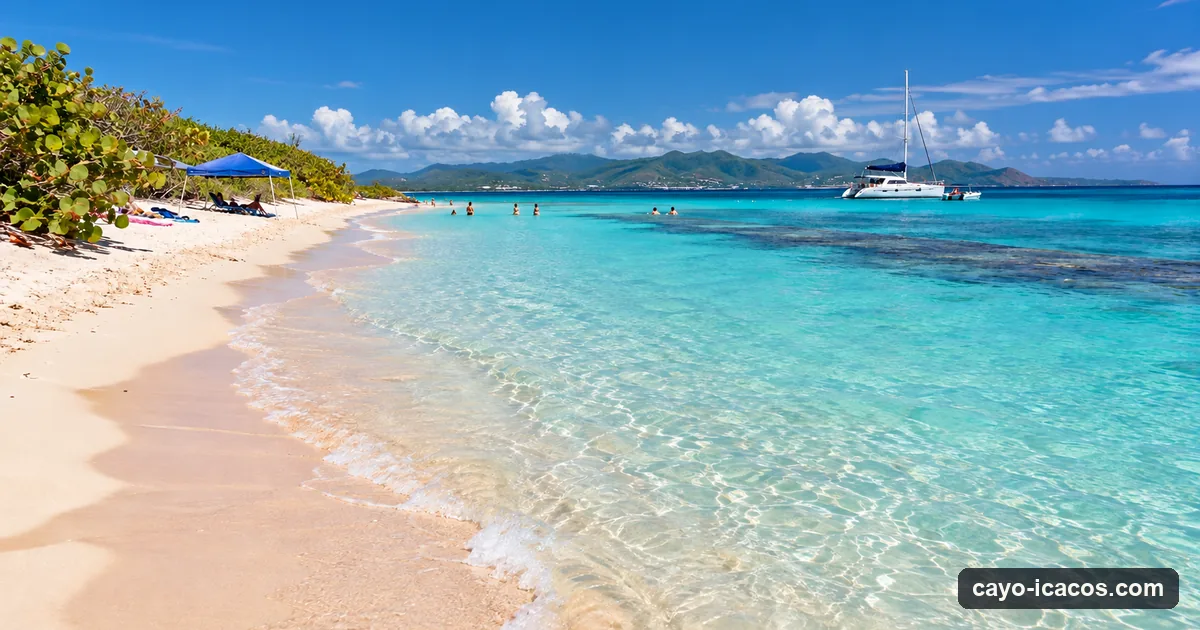
Cayo Icacos has one beach worth the name, on its west shore, facing the mainland and sheltered from the trade wind. It is a few hundred metres of pale sand with a shallow, clear lee, a reef that begins a short swim out, and scrub behind it. That is the complete inventory of what the cay offers a visitor, and the honest version of this page is a list of what it does not.
What is not there
No toilet. No kiosk, no bar, no drinking water. No bins - everything you carry in goes back on the boat. No lifeguard, no first-aid post, no phone signal you can rely on. And no shade you would choose to sit under: the inland vegetation is low scrub and sea grape, not a palm canopy, and a listing that promises “palm shade” is describing a different island. The water-taxi operators bring umbrellas because nothing on the cay will do the job for you.
The last plumbing is at the dock. The catamarans have a restroom on board; the water-taxi crowd uses the toilets at the Kayak Village pier before the run. Plan the day around that, especially with small children.
What is there
The beach and the lee. The west beach is where every boat lands and every towel goes down. The water is knee-deep for a long way out on a calm day, which is why families with toddlers rate the cay so highly, and it stays clear in the lee even when the windward side is churned.
The reef. It starts a short swim off the sand and runs along the shore. It is small, busy by midday and genuinely alive: the reviews name sting rays, “tons of cool fish” and, more than once, a wild dolphin that came up to the boat. It also carries black sea urchins in the shallows, which is the one line on this page to take literally - water shoes, and feet off the bottom. The catamarans’ second stop, on the outer reef or off Cayo Lobos, is the better snorkelling; the snorkeling page compares the boats on that.
The quarry and its railway. The cay was a limestone quarry before the reserve existed, and the remains - cuttings, the line of a short railway - are in the scrub on the south side. The water-taxi guides walk a 45-minute loop past them and tell the story; one family wrote that their guide “shared fascinating facts about the island’s ecosystem and history as a former limestone mine”. Wear shoes for it; the ground is coral rubble.
The reserve. The cay is the largest uninhabited island of the Reserva Natural Arrecifes de la Cordillera, about 160 acres, protected since 1980 and managed by Puerto Rico’s natural-resources department (the DRNA) since 1991. Protection here means what the operators are allowed to do, not a ranger on the beach.
The rules that actually exist
- No pets. Every shared boat bans them, so none reach the cay.
- No amplified music from boats. An administrative order in 2025 banned sound systems on vessels in the reserves, with rangers using drones to catch offenders. A listing that promises “music” is promising it on the way out, in open water, or quietly.
- No entry fee for water-taxi visitors. The catamaran operators collect a $3 “DRNA fee” in cash at check-in; we could not find its legal basis on the department’s own pages, so treat it as a line on the operator’s bill rather than a park ticket.
- Drones are restricted over the reserve since 2025; no rule text we could locate says how. Ask the crew before flying one.
- No reef-safe-sunscreen law in Puerto Rico, unlike Hawaii or the US Virgin Islands. The reef does not know that. Lotion rather than spray, applied at the dock.
- Anchoring is regulated in principle; the mooring buoys the reserve plan calls for are still a pending project. This is the operators’ problem, not yours.
What to bring
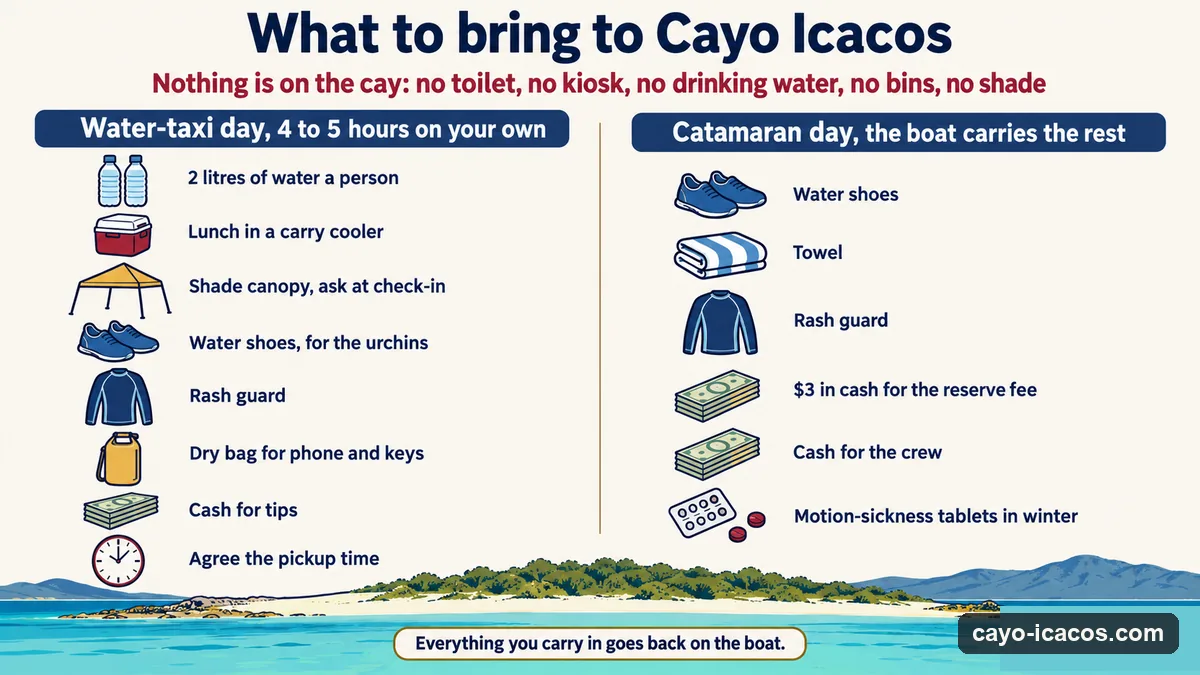
The list follows from the inventory above. For a water-taxi day, where you are on your own for four to five hours:
- Two litres of water a person, plus whatever the cooler holds. The package cooler carries water, soda and beer; it does not carry lunch.
- Lunch, in a cooler you can carry across sand. The operators allow an extra cooler.
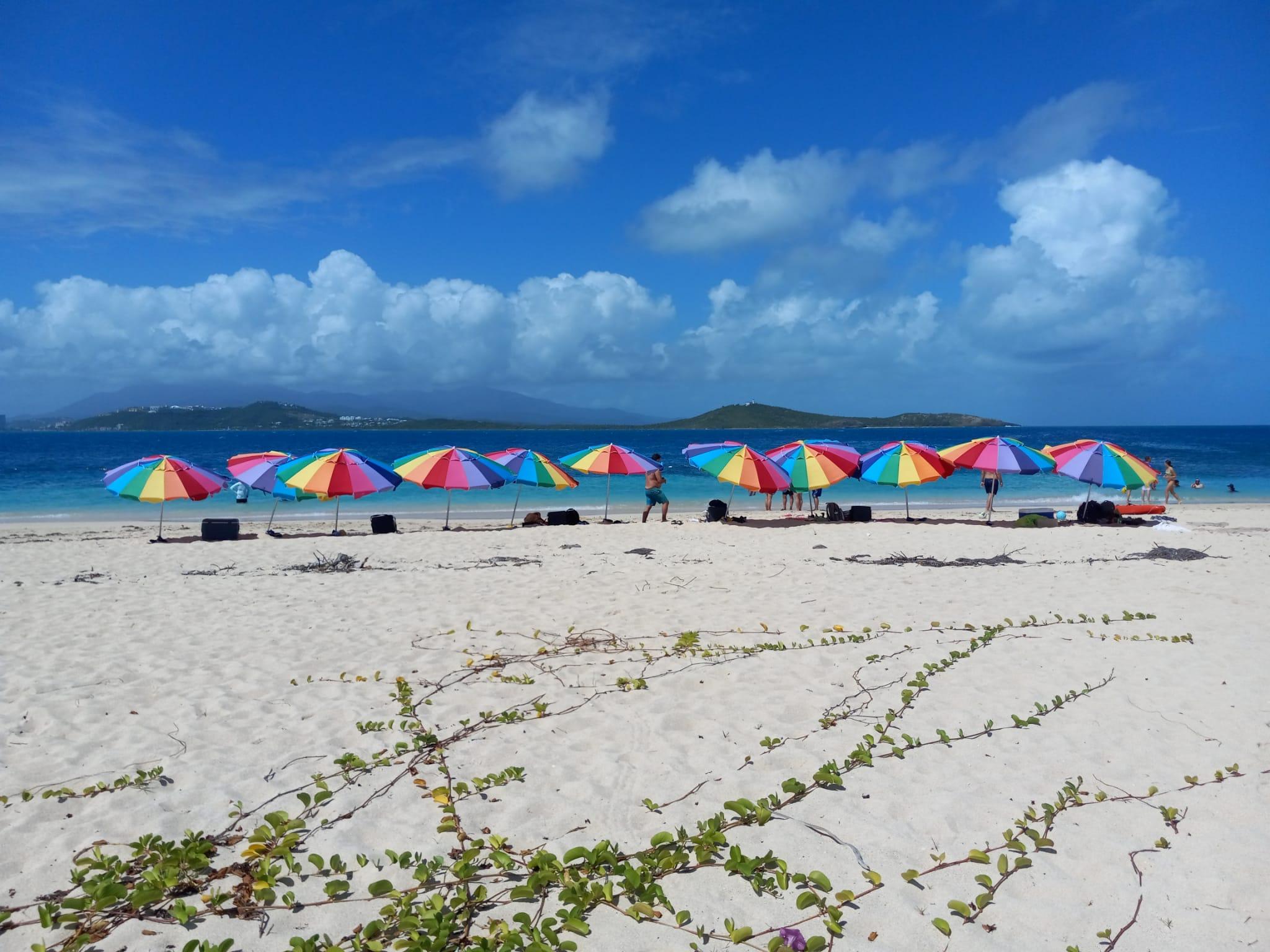
- Shade. The package includes umbrellas, but ask for the canopy at check-in - one December guest got “a partial shade setup that didn’t work as well” while other groups had a proper one. A bare crossing includes no shade at all.
- Water shoes, for the urchins and the quarry ground. A rash guard beats re-applying lotion.
- A dry bag for phones and keys; there is nowhere to leave anything.
- Cash for tips. Agree the pickup time before the boat leaves, because you may not be able to call.
For a catamaran day the boat carries the water, the lunch, the bar, the snorkel gear and the toilet, and the list shrinks to water shoes, a towel, a rash guard, $3 in cash for the fee, cash for the crew, and motion-sickness tablets in winter.
When the beach is at its best
A weekday morning, before 10:30, in February or March - or from April to June if you want the calmest sea for the reef. Weekends and Semana Santa bring the catamaran flotilla between nine and noon and the lee fills with boats; by two the cay is empty again. Sargassum reaches this coast from April to October, and 2026 is forecast as a heavy year; the Sargassum Watch System publishes a monthly outlook and CARICOOS a seven-day forecast, and a heavy week turns the lee brown and the beach smelly, and nobody on the dock will tell you in advance. How to get there, dock by dock, is here.
Book a Boat to Cayo Icacos
The catamaran day from Puerto del Rey with lunch and a bar, rated 4.8 by 1,010 verified guests, from about $155 - or the water taxi beach day from Las Croabas from $95. Free cancellation up to 24 hours before on both (checked October 2026). Nothing on this page gets you there without a boat.
Check Availability & Book